Contact Us
Lishuangdian Industrial Zone, Zhengding County, Shijiazhuang City, Hebei Province, China.
info@hsspcflooring.com
Whatsapp/Wechat: +86 15933619081

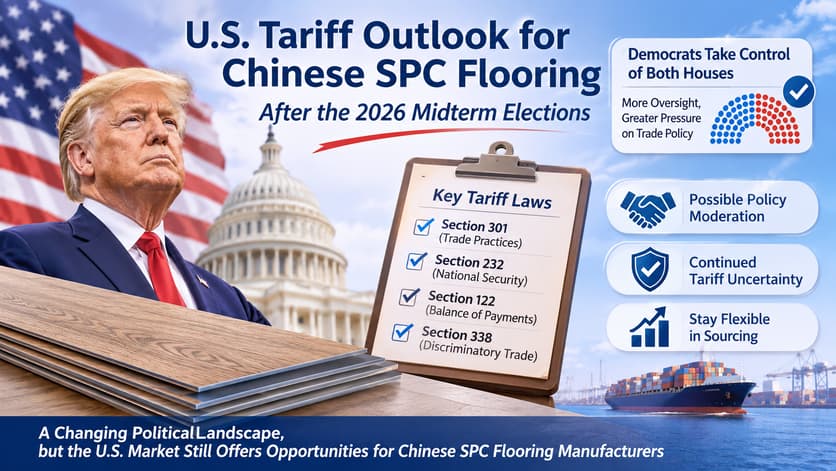
The 2026 U.S. midterm elections have introduced a new political dynamic into the outlook for Chinese flooring imports. Democrats achieved major victories, gaining control of both the House of Representatives and the Senate. The results reflected growing voter concerns about living costs, economic conditions, and the impact of the Trump administration’s policies, including tariffs.
For the U.S. flooring industry, this political shift may increase pressure on the administration to reconsider trade measures that raise import costs for distributors, retailers, contractors, and consumers.
However, a change in congressional control does not automatically mean that tariffs on Chinese SPC flooring will be reduced. President Trump retains significant executive authority over trade policy and can continue using existing legal mechanisms, including Section 301 and Section 232, subject to their respective legal requirements and investigation procedures. The Congressional Research Service’s October 2026 review confirms that the administration continues to rely on several statutory authorities for its tariff actions.
Looking ahead, three developments are worth monitoring:
For Chinese SPC flooring manufacturers, the election results offer a reason for cautious optimism, but not a basis for assuming that import duties will fall in the near future.
U.S. buyers should evaluate the full landed cost of imported flooring, including product price, applicable customs duties, freight, insurance, customs brokerage, and other import-related charges. They should also verify the correct HTS classification and applicable tariff measures for each product before placing orders.
For manufacturers, the most practical strategy is to remain competitive through consistent product quality, efficient production, flexible specifications, OEM services, and transparent communication about trade-related costs. Rather than relying on a possible tariff reduction, suppliers should build a business model that can remain competitive under different tariff scenarios.