Contact Us
Lishuangdian Industrial Zone, Zhengding County, Shijiazhuang City, Hebei Province, China.
info@hsspcflooring.com
Whatsapp/Wechat: +86 15933619081

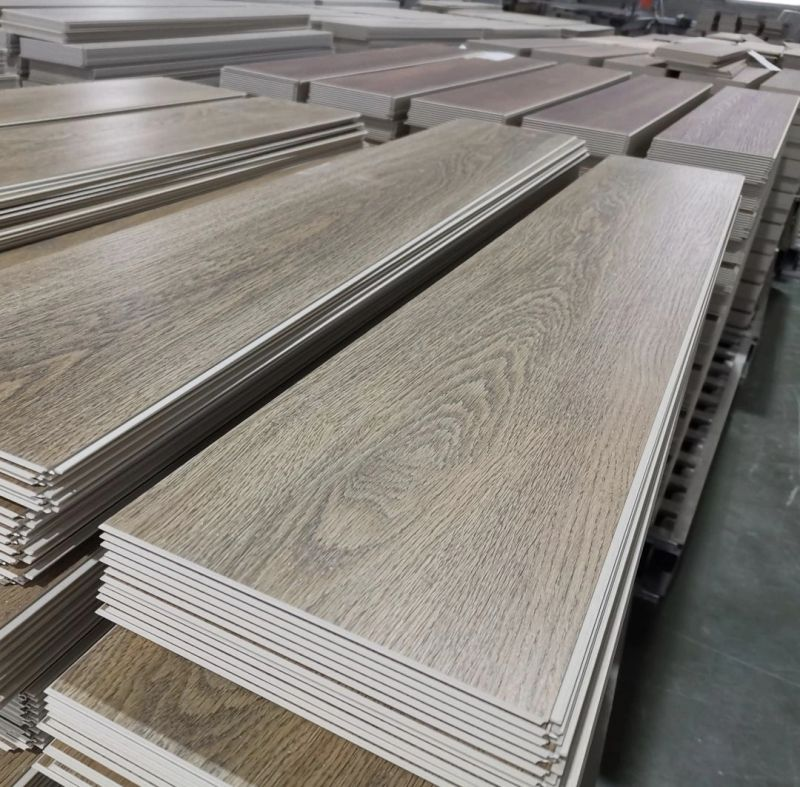
If you have ever tried to compare SPC flooring, you have probably noticed how quickly the specification sheets start to look the same.
5mm.
6mm.
12 mil.
20 mil.
Waterproof.
Attached pad.
Click lock.
Residential warranty.
Commercial warranty.
On paper, two products can appear almost identical and still perform very differently once they are installed.
That raises a much more useful question:
How can you actually tell whether an SPC floor is good quality?
A long-running discussion among flooring installers, manufacturers, retailers and homeowners on Reddit raised exactly this question. What makes the discussion interesting is that the people involved repeatedly came back to factors that are sometimes overlooked when flooring is purchased from a specification sheet alone: the core, the locking profile, milling accuracy, subfloor preparation, installation and production consistency.
From a manufacturer’s perspective, we agree with the basic idea.
There is no single number that tells you whether an SPC floor is good.
One source of confusion starts with terminology.
People sometimes ask whether they should choose “SPC or LVP,” as though they are completely separate flooring categories.
Strictly speaking, LVP — Luxury Vinyl Plank — is a broader description of vinyl flooring in plank form. SPC is one type of rigid-core vinyl plank construction. The Reddit discussion also points this out because comparisons between “SPC and LVP” can become misleading unless the exact LVP construction is specified.
A more useful comparison might therefore be:
SPC rigid core vs WPC rigid core;
SPC click vs dry-back LVT;
or one SPC construction against another SPC construction.
Once that distinction is clear, comparing quality becomes much easier.
Wear layer is probably one of the most commonly compared specifications in vinyl flooring.
For residential products, you may see 12 mil.
For heavier residential and commercial products, 20 mil / approximately 0.5mm is extremely common.
And some products go considerably higher.
A thicker wear layer can provide greater protection against wear over time, particularly in higher-traffic applications. But one of the strongest points raised in the discussion is that wear-layer thickness should not be confused with the overall quality of the floor.
This distinction matters.
A 20mil wear layer does not automatically tell you whether the click system is strong.
It doesn’t tell you whether the planks have been milled accurately.
It doesn’t tell you whether the core is dimensionally stable.
And it doesn’t tell you whether the floor has been installed over an acceptable subfloor.
This is why we would never recommend evaluating an SPC product from wear layer alone.
For an importer or distributor, 0.5mm wear layer should be treated as one part of the product specification, not as a quality certificate.
Another interesting part of the discussion concerns total thickness and SPC core thickness.
One contributor identifying themselves as an SPC manufacturer argued that very thin SPC products leave less material around the tongue-and-groove locking profile. Their concern was therefore not simply whether a 4mm plank “feels thinner” than a 6mm plank, but how much material remains around the locking joint.
That is a much more useful way to think about thickness.
With click flooring, part of the rigid core has to be milled away to create the locking profile.
So rather than asking only:
“How thick is this SPC?”
we would also look at:
How thick is the actual SPC core?
How is the locking profile designed?
How much material supports the tongue and groove?
How strong is the joint after repeated loading?
A thicker product can provide advantages in certain constructions, but thickness alone still does not guarantee quality.
A well-produced floor depends on the relationship between core formulation, density, thickness, milling accuracy, and locking-system design.
This is one of the most useful lessons from the entire discussion.
People naturally focus on the visible parts of flooring — colour, wood grain, embossing and bevel.
Installers tend to notice something else very quickly:
How well do the planks actually lock together?
A properly manufactured click profile should engage consistently. Once properly connected, the planks should lie correctly without unexplained gaps, excessive force or visible stress around the joint.
The Reddit discussion includes an SPC manufacturer describing improperly engaged joints, damaged locking profiles, and excessive gaps as warning signs that can eventually lead to separation.
This is why milling precision matters so much.
You can have an attractive décor and a 20mil wear layer, but if the tongue-and-groove geometry is inconsistent, installation becomes difficult, and the long-term performance of the floor can suffer.
For importers, this is something worth checking during sample evaluation.
Don’t just look at the sample.
Click several planks together.
Then disconnect them.
Try another carton.
Look closely at the short-side and long-side joints.
This simple exercise can reveal things that a technical datasheet cannot.
One of the clearest areas of agreement in the discussion is installation.
Subfloor preparation matters.
A rigid-core plank bridges small irregularities differently from a flexible glue-down product, but “rigid” does not mean the floor can simply be installed over any uneven surface.
The discussion repeatedly points to subfloor flatness as a critical factor in successful click-flooring installation. It also highlights expansion gaps and correct engagement of the locking system as common installation issues.
This distinction is important for warranty claims.
When joints separate several months after installation, it is tempting to immediately conclude:
“The click system failed.”
Sometimes that is correct.
Sometimes it isn’t.
The underlying cause could involve an uneven subfloor, inadequate expansion space, incorrect installation technique, damaged click profiles during installation or another site condition.
A professional manufacturer therefore needs both good production control and clear installation instructions.
The plank and the installation system cannot really be separated.
Attached IXPE or EVA backing is now common on SPC click flooring.
It can improve underfoot feel and contribute to acoustic performance, depending on the complete flooring assembly.
But buyers sometimes assume:
If one underlay is good, adding another one underneath must be even better.
That is not necessarily true.
The flooring manufacturer’s installation instructions should determine whether an additional underlayment is permitted.
An overly soft or unsuitable additional layer can allow more vertical movement at the joints, which may place unnecessary stress on the locking system.
So when comparing:
SPC with IXPE
and
SPC without IXPE
don’t simply ask which one is “better.”
Ask what the intended installation system requires.
This point from the Reddit discussion deserves much more attention from importers.
Flooring produced in different production lots can show variation in shade or gloss level, which is why obtaining sufficient material from the same production lot is important for a single installation.
From the manufacturer’s side, colour control is one of the less glamorous but extremely important parts of SPC production.
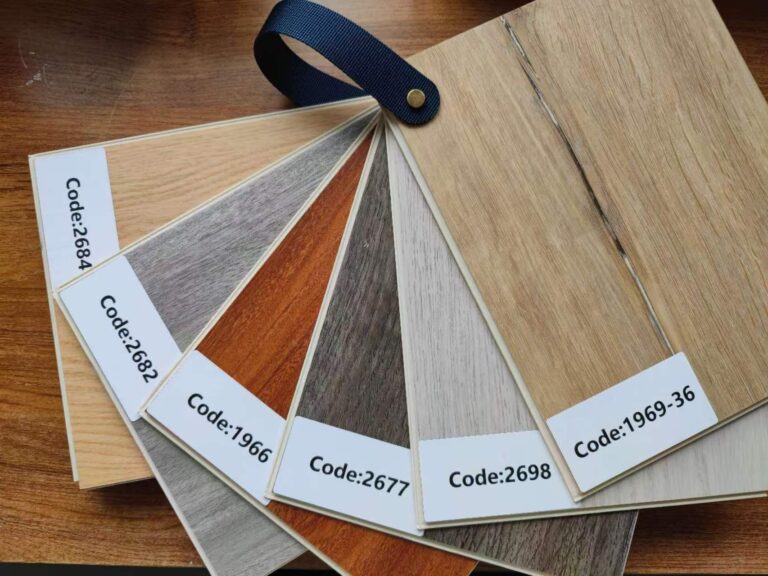
Imagine approving a beautiful European oak sample.
The first container arrives and sells well.
Six months later you reorder exactly the same colour.
If the second production is visibly warmer, darker or glossier than the first, the product may technically still be usable — but commercially you have a problem.
This matters particularly for distributors who maintain inventory.
A professional SPC supplier therefore shouldn’t only be able to make a beautiful colour once.
The challenge is making it consistently.
Another practical point raised in the discussion concerns visible defects.
Colour, shade and obvious visual differences should be identified before installation rather than after an entire room has been completed.
This sounds obvious, but it is surprisingly important.
Open several cartons.
Lay some planks out.
Look at them under the actual site lighting.
Check colour variation.
Inspect edges.
Inspect the surface.
Check the click profile.
If something clearly doesn’t look right, stop before installation.
Once hundreds of square metres have been installed, a relatively simple product issue can become a much more complicated dispute involving material, labour and removal costs.
This part needs careful wording because the Reddit discussion contains some very broad claims.
SPC flooring contains polymer-based materials, so we would not describe SPC simply as “toxin-free.”
A better purchasing approach is to ask for relevant emissions testing and certification for the actual product being purchased.
Depending on the target market, buyers may look for FloorScore or other applicable low-emission documentation.
This is much more meaningful than relying on broad marketing phrases such as:
Eco-friendly.
Green flooring.
Non-toxic.
Zero everything.
As manufacturers, we believe technical claims should be supported by appropriate test results wherever applicable.
This is another area where price differences can originate.
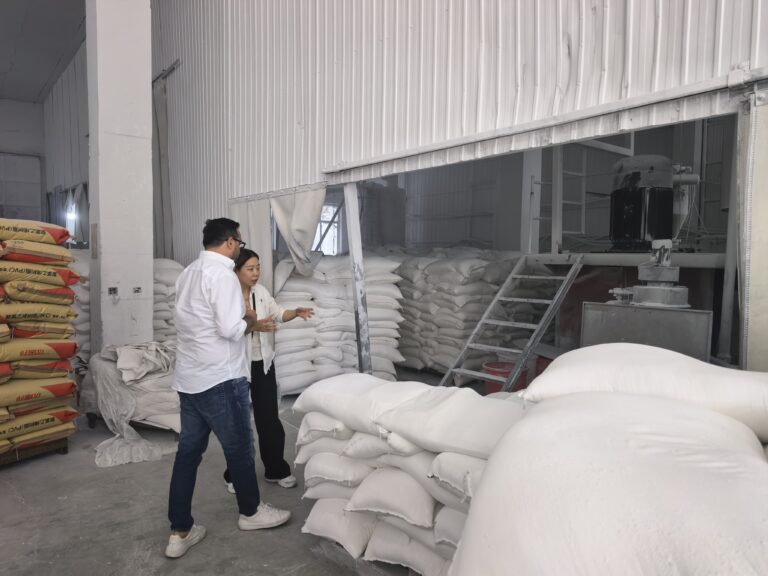
SPC core formulation is not visible once the floor is installed, which means it can be tempting to focus almost entirely on surface appearance.
But the quality and consistency of the raw materials used in the core can affect manufacturing control and product performance.
For our own high-quality SPC products, we prefer 100% virgin raw materials because they give us greater control over formulation and production consistency.
However, buyers should avoid trying to determine the entire material formulation from core colour alone.
A beige, white or grey core is not, by itself, laboratory proof of raw-material composition.
If raw-material composition matters to your purchasing specification, make it part of the specification and quality-control process rather than relying only on visual judgment.
The Reddit discussion contains strongly differing opinions about what a “good” SPC floor should cost.
That disagreement itself is useful.
Retail price includes far more than manufacturing cost.
Brand positioning, distribution layers, retailer margins, warehousing, freight, duties, marketing and local service can all influence the final price.
So a more expensive SPC floor is not automatically better simply because it costs more.
At the same time, an unusually low price deserves investigation.
Something has created that price.
The question is what.
Was it production efficiency?
Direct factory purchasing?
A simpler décor?
Lower packaging costs?
A thinner core?
Different raw materials?
A cheaper locking system?
Reduced testing?
For an importer, asking why the product costs what it costs is often more useful than simply asking for another five cents off the quotation.
Another interesting theme in the discussion is whether buyers should rely heavily on brand names.
For consumers, a reputable brand can provide useful advantages: established specifications, local inventory, warranty infrastructure, and dealer support.
For professional importers and private-label distributors, however, the question becomes different.
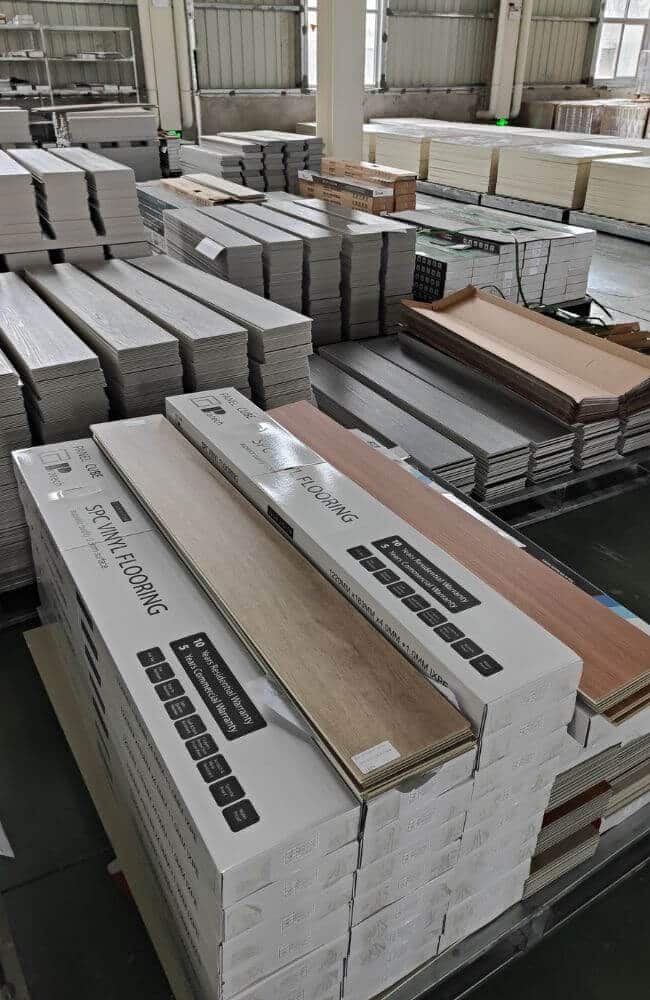
They often need to evaluate the factory behind the product.
If a supplier claims to be the manufacturer, a professional buyer can ask:
Where is the factory?
What production processes are done in-house?
What equipment is used for extrusion, profiling, and surface treatment?
How is core density controlled?
How is thickness tolerance checked?
How is the click profile inspected?
How are colours controlled between batches?
What happens when production falls outside tolerance?
Those questions tell you far more than a factory photograph on a website.
After stripping away the marketing language, a good SPC flooring decision comes down to looking at the product as a system rather than a list of numbers.
Wear layer matters.
But so does the core.
Thickness matters.
But so does the material remaining around the click profile.
The locking system matters.
But so does milling accuracy.
Waterproof construction matters.
But so does dimensional stability.
Attached IXPE can be useful.
But the installation system underneath it still matters.
And even an excellent product can perform badly when installed over an unsuitable subfloor.
Perhaps the best lesson from the entire discussion is this:
Don’t buy SPC Flooring from the specification sheet alone.
Ask for samples.
Install several pieces.
Inspect the locking system.
Review the technical data.
Understand the core construction.
Confirm the applicable test reports.
Check production consistency.
Understand the installation requirements.
And if you are an importer or distributor, don’t evaluate only the first order.
Ask yourself whether the manufacturer can reproduce the same floor — the same construction, colour, click performance, and overall quality — container after container.
Because for a homeowner, SPC Flooring may be a purchase made once every ten or fifteen years.
For a distributor, importer, or flooring brand, the real test of quality begins with the second order.