Contact Us
Lishuangdian Industrial Zone, Zhengding County, Shijiazhuang City, Hebei Province, China.
info@hsspcflooring.com
Whatsapp/Wechat: +86 15933619081

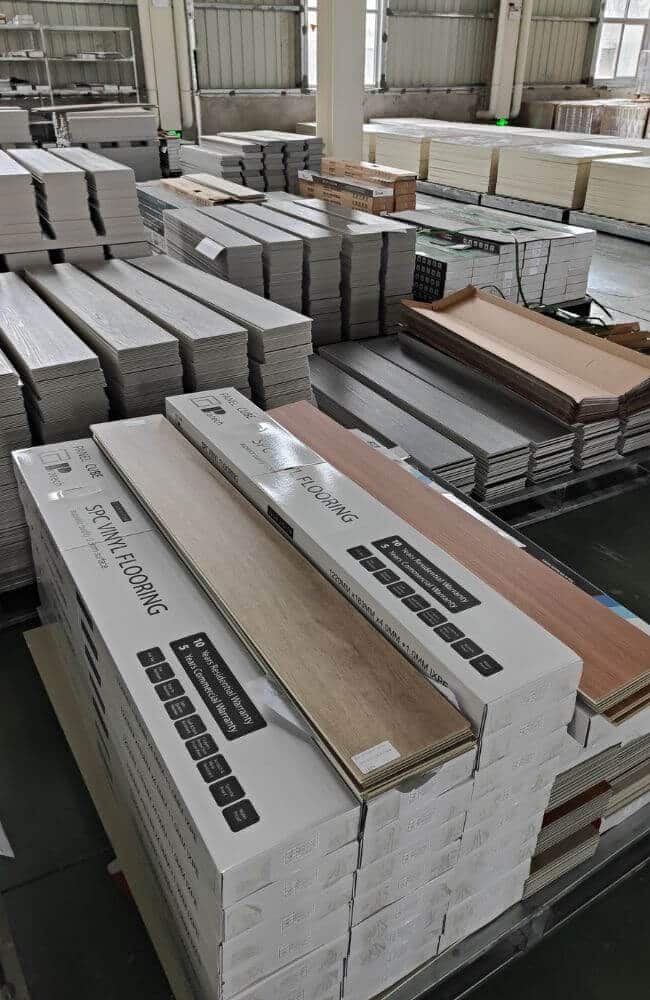
Choosing the right flooring for a busy space is not always easy. Whether you are renovating a commercial office, opening a retail showroom, designing a hotel, or simply looking for something durable enough for a busy family home, the flooring needs to withstand much more than occasional footsteps.
Heavy foot traffic can quickly reveal the weaknesses of ordinary flooring materials. Scratches begin to appear, furniture leaves dents, surfaces lose their original appearance, and stains become increasingly difficult to remove. Over time, what initially seemed like an affordable flooring choice can turn into an expensive maintenance or replacement project.
This is one reason SPC flooring has attracted so much attention in residential and commercial markets. Known for its rigid core construction, water-resistant performance, relatively simple maintenance, and wide range of decorative finishes, SPC flooring has become a practical alternative to traditional flooring materials.
But is SPC flooring really suitable for high-traffic areas? And how does it compare with hardwood, laminate, carpet, and ceramic tile when used in demanding environments?
The answer depends on several factors, including the quality of the SPC core, the thickness of the wear layer, the locking system, installation conditions, and the way the floor will be used.

SPC stands for Stone Plastic Composite, a type of rigid core vinyl flooring manufactured primarily from calcium carbonate, polyvinyl chloride (PVC), and stabilizers. These materials are combined during the manufacturing process to create a dense, relatively rigid core that provides dimensional stability and resistance to everyday impacts.
Unlike traditional flexible vinyl flooring, SPC flooring has a much firmer structure. Although it retains some flexibility, it is designed to resist bending and deformation under normal installation and service conditions.
A typical SPC flooring plank consists of several layers working together to provide protection, appearance, and structural support.
The uppermost surface usually has a UV-cured protective coating that helps resist stains and everyday surface wear. Beneath this is a transparent wear layer, which protects the decorative film from abrasion and scratches. The decorative film creates the realistic wood grain, stone, or other surface appearance.
Below these layers sits the rigid SPC core, which provides most of the plank’s structural strength. Many SPC products also include an attached IXPE or EVA underlayment to improve walking comfort and help reduce certain types of impact noise.
Each layer has a different purpose. A strong core alone does not guarantee a durable floor, just as a thick wear layer cannot compensate for poor locking precision or an unstable formulation.
The performance of a finished SPC floor depends on how well all these components work together.
This layered construction is what makes quality SPC click flooring suitable for a wide range of residential and commercial applications.

A floor installed in a quiet bedroom experiences very different conditions from one installed in a busy office corridor or retail store.
In commercial environments, people may walk across the same areas hundreds or even thousands of times throughout the day. Shoes carry small particles of sand and dirt, furniture is moved during cleaning, and rolling chairs or equipment repeatedly apply pressure to the flooring surface.
Over time, these activities can cause visible wear.
Scratches may develop in frequently used walkways. Surface finishes can gradually lose their original appearance, while heavy furniture or concentrated loads may leave permanent indentations. In entrances, kitchens, and other areas exposed to moisture, inadequate flooring systems can also develop problems associated with water exposure.
For businesses, these issues involve more than appearance. Replacing damaged flooring may require closing part of a store, moving office furniture, or interrupting normal operations.
Hotels, restaurants, shopping centers, schools, offices, and other public buildings therefore need flooring materials that can maintain their appearance while keeping maintenance requirements manageable.
The same principle applies to busy households.
Living rooms, hallways, kitchens, and entrances are often the most heavily used areas in a home. Families with children or pets may place additional demands on their floors, particularly when it comes to scratching, cleaning, and accidental spills.
Choosing the right flooring from the beginning can make a substantial difference to long-term maintenance costs and everyday convenience.
A type of ultra-wear-resistant MSPC flooring is now available, offering a new option for commercial environments.
One of the main reasons SPC flooring performs well in demanding environments is its rigid core construction.
Compared with many traditional flexible vinyl products, SPC flooring provides a firmer foundation beneath the decorative surface. This helps the planks resist certain types of indentation, impact, and movement under normal use.
In commercial offices, for example, desks, cabinets, tables, and other furniture may remain in the same position for years. In retail environments, display fixtures and merchandise stands can place considerable weight on the floor.
A properly manufactured SPC product with suitable load-bearing performance can handle many of these everyday demands.
However, not all SPC flooring is manufactured to the same standard. The density, raw material formulation, extrusion quality, and internal consistency of the rigid core can vary significantly between manufacturers.
A floor made with poorly controlled materials may be more vulnerable to brittle locking edges, deformation, or damage during installation.
This is why the quality of the SPC core matters just as much as the appearance of the finished plank.
At HS Flooring, we pay particular attention to the quality and consistency of the raw materials used in our SPC flooring production. We believe a reliable flooring product should begin with a stable core rather than depending entirely on its decorative surface.
In busy environments, surface wear is often the first sign that a floor is beginning to age.
Footwear can carry abrasive particles across the surface. Pets may scratch the floor with their claws, children move toys and furniture, and office chairs may create repeated friction in the same areas.
Modern SPC flooring is designed with a transparent wear layer that protects the decorative film beneath it.
The thickness and quality of this wear layer play an important role in determining how well the floor resists abrasion over time.
For residential applications, a 0.3 mm wear layer is commonly used, while many commercial projects specify 0.5 mm or thicker wear layers depending on the expected traffic and performance requirements.
A suitable UV coating can also help improve stain resistance and make routine cleaning easier.
Nevertheless, scratch resistance should not be confused with scratch-proof performance. Even premium SPC flooring can be damaged by dragging heavy furniture, sharp objects, or abrasive debris.
Using furniture protectors, suitable entrance mats, and regular cleaning practices will help preserve the floor’s appearance.
For homes with children and pets, retail stores, and busy offices, choosing an SPC product with a properly tested wear layer can significantly improve long-term performance.
Moisture is another major consideration when selecting flooring for frequently used spaces.
Spilled drinks, wet shoes, routine cleaning, and occasional water exposure are common in kitchens, restaurants, cafés, reception areas, and family homes.
One of the strongest advantages of SPC flooring is that its PVC-based rigid core does not absorb water and swell in the same way as traditional wood-based flooring materials.
This makes SPC flooring particularly attractive for areas where occasional spills and surface moisture are expected.
Unlike many hardwood or conventional laminate flooring products, the SPC core itself is highly resistant to water damage.
However, an important distinction needs to be made.
Waterproof SPC flooring does not mean that the entire installed floor is a waterproofing system.
Water can still enter through plank joints, perimeter gaps, or other openings, especially when it remains on the floor for an extended period. Moisture trapped beneath the flooring can also create problems, even when the SPC planks themselves remain unaffected.
For this reason, concrete subfloors should be tested for moisture before installation, and suitable moisture protection should be used whenever required by the product’s installation instructions.
This is especially important for ground-floor installations, basements, and buildings in humid climates.
When properly selected and installed, SPC flooring offers a practical solution for kitchens, cafés, restaurants, living rooms, and other spaces where water resistance is an important requirement.
Floor maintenance is often overlooked when comparing flooring prices.
For commercial property owners, however, cleaning and maintenance costs can become a significant long-term expense.
Carpet may require regular deep cleaning, particularly in areas where dirt and stains accumulate. Hardwood flooring can require refinishing or additional surface treatment after extended use.
SPC flooring generally requires much less specialized maintenance.
Routine sweeping or vacuuming helps remove dust and abrasive particles, while occasional damp mopping with a suitable cleaning solution is normally sufficient to maintain its appearance.
There is no need for regular sanding, polishing, waxing, or refinishing of the kind associated with some traditional flooring materials.
This makes SPC flooring appealing to offices, retail businesses, hospitality projects, and property managers who want a floor that looks attractive without demanding complicated maintenance procedures.
Of course, low maintenance does not mean no maintenance.
Keeping abrasive dirt off the surface, cleaning spills promptly, and following the manufacturer’s cleaning recommendations will help the floor perform as intended.
Temperature and humidity changes can affect almost every flooring material.
Traditional wood flooring expands and contracts as it absorbs and releases moisture. Some flexible vinyl products can also experience dimensional changes when exposed to heat.
SPC flooring was developed partly to address these challenges.
Its mineral-filled rigid core generally provides better dimensional stability than many conventional flexible vinyl flooring constructions.
This can be particularly useful in regions where indoor temperatures and humidity levels change throughout the year.
However, SPC flooring is not completely unaffected by temperature.
Prolonged exposure to intense direct sunlight, excessive heat, or conditions outside the manufacturer’s recommended installation range can still cause expansion, contraction, distortion, or locking-system problems.
Large windows, sunrooms, poorly ventilated spaces, and rooms with significant temperature differences require particular attention.
Correct expansion gaps, suitable subfloor preparation, and adherence to the manufacturer’s installation instructions remain essential.
In other words, SPC flooring offers good dimensional stability, but proper installation and environmental control are still necessary to achieve reliable long-term results.
Yes, thickness matters, but it should never be considered in isolation.
When choosing SPC flooring, buyers often focus on the total plank thickness because it is one of the easiest specifications to compare.
However, a thicker plank is not automatically more wear-resistant than a thinner one.
The rigid core thickness, wear layer specification, locking profile, attached underlayment, and manufacturing quality all influence the finished product’s performance.
For residential projects, SPC flooring with a total thickness of approximately 4 mm to 6 mm is commonly available.
A 4 mm SPC floor can be suitable for certain budget-conscious residential projects when the subfloor is properly prepared and the product meets the required performance specifications.
A 5 mm SPC floor is a popular choice for many residential applications because it provides a useful balance between cost, structural performance, and installation requirements.
A 6 mm product may offer additional core thickness and can be appropriate for projects where greater rigidity or a more substantial flooring construction is preferred.
SPC flooring with a total thickness of 7 mm or more is also available for selected residential and commercial applications, although greater thickness alone does not establish commercial suitability.
For demanding commercial environments, it is especially important to evaluate the wear layer and the relevant performance test results.
The wear layer protects the decorative surface from abrasion, while the core and locking system contribute to structural stability and installation performance.
A 5 mm SPC product with a high-quality 0.5 mm wear layer may offer better surface wear performance than a thicker product fitted with a lower-grade 0.2 mm wear layer.
The thickness of the attached underlayment should also be considered separately. A product described as 5 mm SPC plus 1 mm IXPE has a total nominal thickness of 6 mm, but the rigid SPC portion remains 5 mm.
Thicker constructions and suitable underlayments may also improve certain aspects of walking comfort and acoustic performance, although actual results depend on the complete flooring system and installation conditions.
For high-traffic areas, the most sensible approach is to evaluate the entire product specification rather than choosing a floor based only on its total thickness.
Modern offices require flooring that can withstand daily employee movement, furniture use, and regular cleaning.
Corridors, meeting rooms, reception areas, and shared workspaces are particularly demanding because people use them repeatedly throughout the day.
SPC click flooring offers a practical combination of attractive appearance, relatively simple installation, and low maintenance requirements.
Wood-look SPC flooring is especially popular in contemporary offices because it creates a warmer atmosphere than many traditional hard flooring materials while remaining easier to maintain than natural hardwood.
For offices with rolling chairs, appropriate chair mats or other protective measures may still be necessary, depending on the flooring specification.
Retail environments need flooring that remains presentable despite continuous customer traffic.
A worn or damaged floor can affect the appearance of an entire store, particularly in fashion showrooms, furniture stores, and other spaces where interior design is part of the customer experience.
SPC flooring is available in a wide variety of natural wood, stone, and contemporary decorative finishes, allowing retailers to create different visual styles without relying entirely on expensive natural materials.
When selected with an appropriate commercial wear layer and performance classification, SPC flooring can help reduce maintenance interruptions and replacement costs.
Hotels and hospitality spaces place considerable importance on both appearance and durability.
A hotel lobby should create a strong first impression, while corridors, guest rooms, and reception areas must withstand regular use.
Restaurants and cafés also need surfaces that can be cleaned efficiently and tolerate occasional spills.
SPC flooring can be suitable for many of these environments, particularly when the product has an appropriate wear layer, slip-resistance performance, and installation system.
For wet commercial kitchens or other areas requiring specialized drainage, hygiene, or waterproofing systems, additional flooring requirements must be considered.
Schools, training centers, and educational buildings experience heavy daily use.
Students move between classrooms, furniture is frequently rearranged, and floors need regular cleaning.
A properly specified SPC floor can provide a durable and easy-to-maintain surface for classrooms, administrative offices, and other suitable indoor spaces.
For educational projects, buyers should also review relevant requirements for slip resistance, fire performance, emissions, and acoustic comfort.
High-traffic flooring is not only a commercial concern.
In many homes, the living room, kitchen, hallway, and entrance receive more daily use than any other area.
Children play on the floor, pets move between rooms, and furniture is regularly repositioned.
SPC flooring offers a useful combination of durability, water resistance, and decorative flexibility for these spaces.
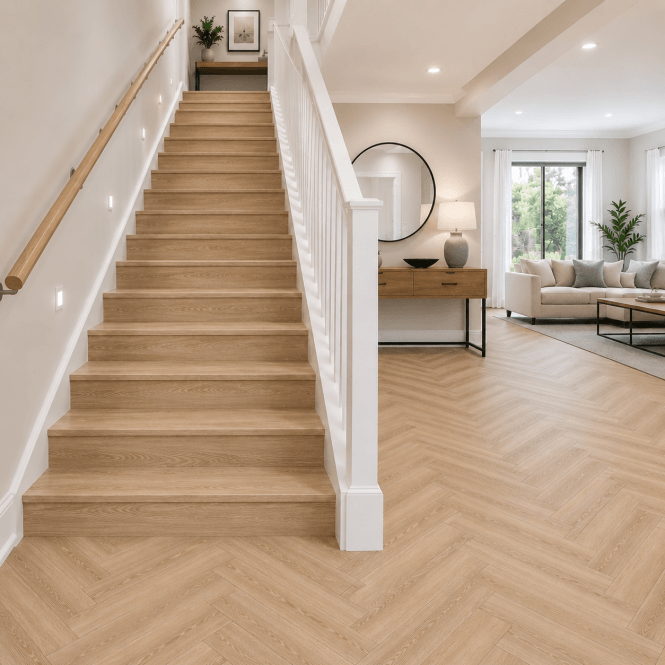
Its realistic wood grain designs are particularly attractive to homeowners who appreciate the appearance of natural timber but prefer a flooring material with simpler maintenance requirements.
Natural hardwood flooring has a distinctive appearance and character that many homeowners continue to value.
Real wood can develop an attractive appearance over time, and some hardwood floors can be sanded and refinished several times during their service life.
However, hardwood flooring generally requires more attention to moisture and indoor environmental conditions.
Water exposure, changes in humidity, and everyday surface wear can affect its appearance and dimensional stability.
SPC flooring offers a different set of advantages.
It can reproduce many popular wood grain appearances while providing a highly water-resistant core and relatively simple cleaning requirements.
For busy households and commercial environments where maintenance convenience is a priority, SPC flooring may be a more practical choice.
Hardwood remains attractive for buyers who value genuine natural materials and the possibility of future refinishing.
Laminate flooring is another popular alternative to natural wood.
It can provide excellent surface abrasion resistance, and high-quality laminate products are widely used in both residential and commercial spaces.
However, many conventional laminate floors contain wood-based cores that can swell when water enters the joints or remains in contact with the material.
Although newer water-resistant laminate products have improved significantly, SPC flooring generally offers a stronger advantage when it comes to the water resistance of the core material itself.
This makes SPC particularly appealing for kitchens, entrances, and other indoor areas where occasional moisture exposure is expected.
The final choice should still consider wear resistance, installation requirements, comfort, price, and the intended application.
Carpet provides softness, warmth, and acoustic comfort that hard flooring materials cannot always reproduce.
For bedrooms, lounges, and certain hospitality environments, these characteristics can be desirable.
However, carpet installed in high-traffic areas can accumulate dirt and stains, and some products may show visible wear or flattening over time.
Regular vacuuming and periodic deep cleaning are often necessary to maintain its appearance.
SPC flooring provides a harder, smoother surface that is generally easier to clean.
For busy offices, corridors, retail stores, and homes with pets, this can make SPC flooring a convenient alternative.
The trade-off is that carpet often provides a softer walking surface and greater sound absorption, so the intended use of the room should guide the decision.
Ceramic tiles and SPC flooring are both popular choices for modern residential and commercial projects, but they offer different advantages.
Ceramic tile is a hard, durable flooring material with excellent resistance to water and many forms of everyday wear.
When installed correctly using suitable adhesives, mortar, and a properly prepared substrate, quality ceramic tile can remain in service for decades.
It is also well suited to environments where heat, moisture, and heavy cleaning requirements are important considerations.
The main disadvantages of ceramic tile often relate to installation time, labor costs, walking comfort, and future renovation work.
Traditional tile installation usually requires skilled installers, appropriate adhesives or mortar, grout, and careful substrate preparation.
The process can be relatively time-consuming, particularly when compared with floating click-lock flooring systems.
SPC flooring is generally easier and faster to install.
Its click-lock construction allows planks to be assembled without applying adhesive across the entire subfloor. In some renovation projects, SPC flooring can also be installed over existing ceramic tiles, provided the tiles are secure, the surface meets flatness requirements, grout lines are appropriately treated, and the installation is approved by the flooring manufacturer.
This makes SPC flooring especially attractive for apartment renovations, rental properties, and projects where reducing installation time is important.
Future renovation is another consideration.
Replacing a damaged ceramic tile can be difficult because removing it may affect neighboring tiles. Color differences between production batches can also make an exact replacement difficult to find.
With click-lock SPC flooring, damaged planks can often be replaced without removing the entire floor, although the process may require partial disassembly or a suitable plank-replacement technique.
Keeping spare planks from the original production batch is advisable because SPC flooring designs can also vary between batches.
Slip resistance is another important factor.
SPC flooring is available with textured and slip-resistant surfaces that can perform well in areas exposed to occasional moisture. However, ceramic tiles are also available with specialized anti-slip finishes, and neither material should be assumed safer simply because of its name.
For wet areas, the actual slip-resistance test results and intended application are more important than whether the product is SPC or ceramic.
Temperature exposure should also influence the decision.
Ceramic tiles generally perform well in areas exposed to strong sunlight and higher surface temperatures. SPC flooring, while dimensionally stable under suitable conditions, may deform when exposed to excessive heat or prolonged temperatures beyond its specified limits.
For rooms with intense direct sunlight or persistent high temperatures, ceramic tile may be the more appropriate choice.
On the other hand, SPC flooring can offer a warmer feeling underfoot, easier installation, and a wide selection of realistic wood and stone finishes.
Both materials can work well within the same home.
For example, ceramic tiles may be preferred in wet rooms, bathrooms, or areas exposed to intense heat, while SPC flooring can be used in bedrooms, living rooms, hallways, and other suitable indoor spaces.
Rather than treating one material as universally better, it makes more sense to select each flooring type according to the room’s actual conditions.
The lifespan of SPC flooring depends heavily on product quality, installation conditions, maintenance, and the intensity of use.
High-quality SPC flooring can provide approximately 15 to 25 years of service under suitable conditions, although this should be treated as a possible service-life range rather than a guarantee.
In demanding commercial environments, actual service life may be shorter depending on foot traffic, cleaning practices, rolling loads, and surface abrasion.
The wear layer is especially important.
A floor with a thin or low-quality wear layer may begin to show visible wear long before the rigid core reaches the end of its useful life.
Likewise, a product with an unstable core or poorly manufactured locking system may develop installation problems even when the decorative surface remains in good condition.
Subfloor preparation also plays a major role.
Uneven substrates, excessive moisture, insufficient expansion allowances, and unsuitable installation methods can reduce the service life of an otherwise well-manufactured product.
For buyers planning a long-term commercial project, reviewing the manufacturer’s warranty, wear layer specifications, test reports, and installation requirements is more useful than relying on lifespan claims alone.
At HS Flooring, we understand that flooring for high-traffic environments must do more than look attractive in a showroom.
It needs to remain reliable after installation, withstand everyday use, and provide consistent performance from one production batch to the next.
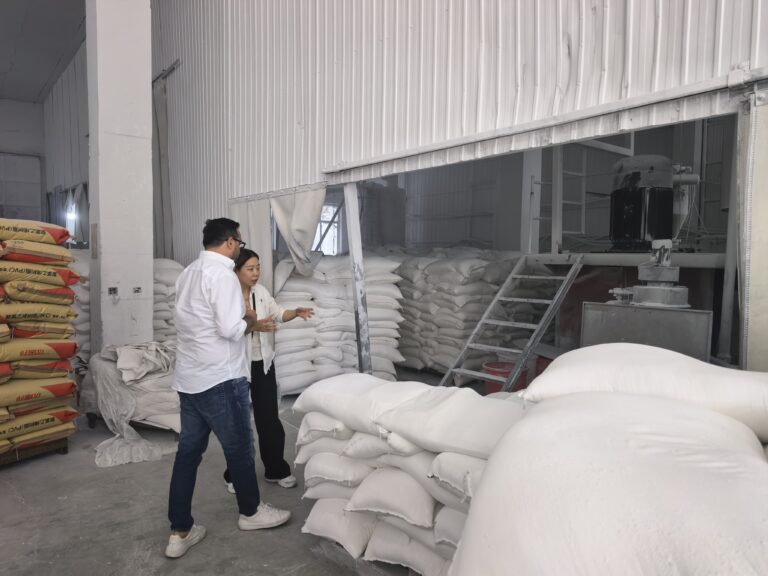
As a China-based SPC and LVT flooring manufacturer, we focus on combining carefully controlled raw materials, manufacturing consistency, and flexible product customization to meet the requirements of different international markets.
Our SPC flooring production emphasizes the use of virgin raw materials and controlled formulations rather than relying on low-cost recycled materials of uncertain composition.
We believe the foundation of a high-quality SPC floor begins with the core itself.
A dense, properly formulated rigid core helps provide structural strength, while precise extrusion and profiling are essential for maintaining consistent plank dimensions and reliable locking performance.
This is particularly important for overseas importers, distributors, contractors, and private-label flooring brands that need repeat orders to match previous production standards.
The surface of the flooring is equally important.
HS Flooring offers SPC flooring with different wear layer specifications, protective surface finishes, and realistic decorative designs to suit residential and commercial applications.
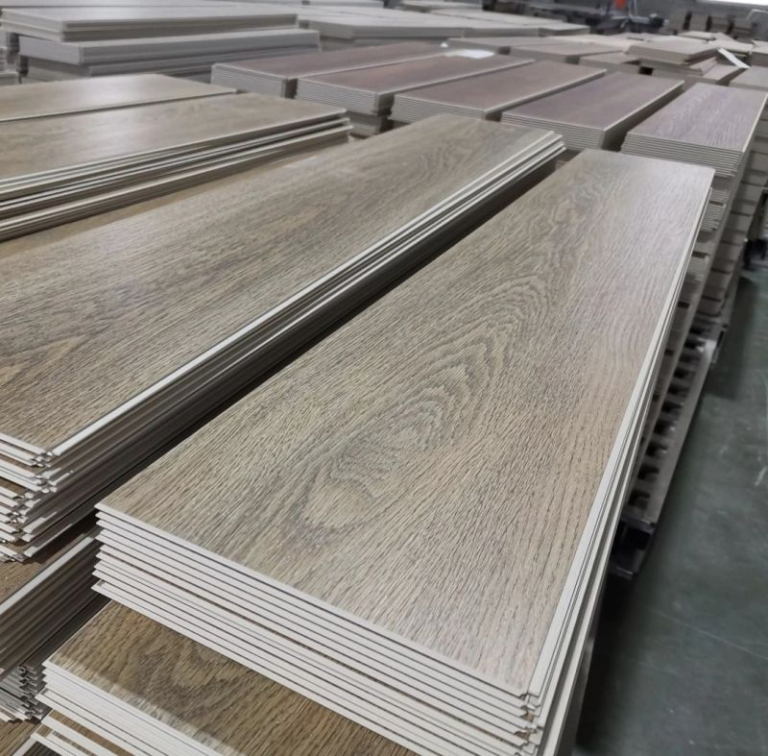
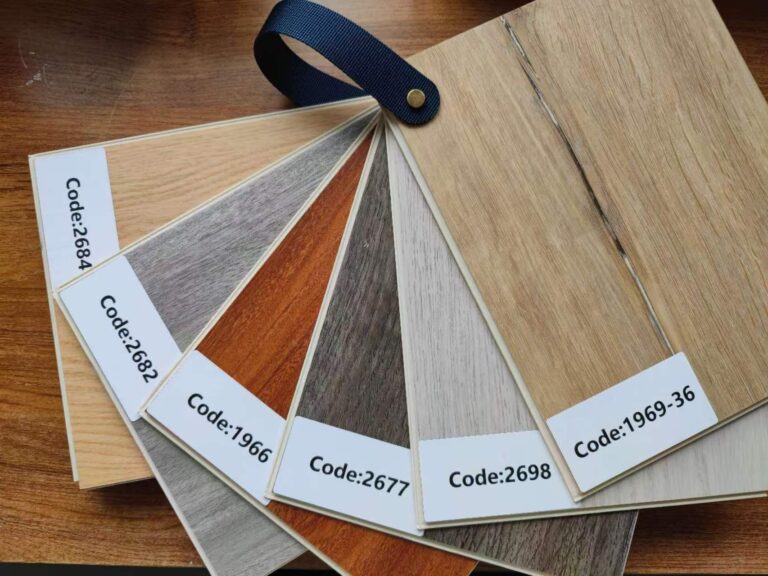
Our wood-look collections reproduce a variety of natural timber appearances, while stone-look and contemporary designs provide additional options for modern interiors.
We also support customized colors, surface designs, plank dimensions, and selected product structures according to customer requirements.
For click-lock installation, suitable locking profiles can be selected according to product specifications and applicable licensing arrangements.
An accurately manufactured locking system helps reduce installation difficulties and contributes to the stability of the finished floor.
Water resistance is another important part of our product development.
Our SPC flooring uses a water-resistant rigid core suitable for many indoor environments where occasional spills and moisture exposure are expected. As with all SPC flooring, correct subfloor preparation and moisture management remain essential.
For customers concerned about maintenance, the combination of a suitable wear layer and protective surface coating helps simplify everyday cleaning.
From residential apartments and family homes to offices, retail stores, hotels, and other commercial projects, we can discuss different SPC flooring specifications according to the expected traffic level, installation environment, and target market.
Our manufacturing approach is based on a simple principle: competitive pricing should not come from compromising the fundamental quality of the product.
By combining direct factory supply, flexible OEM and ODM manufacturing, and consistent quality control, we aim to help our customers develop flooring products that remain competitive in their local markets.
For importers, wholesalers, flooring distributors, construction contractors, and private-label brands, choosing SPC flooring involves more than selecting a color and negotiating a price.
Different markets have different expectations.
A flooring distributor supplying residential renovation projects may prioritize competitive pricing, popular wood grain designs, and easy installation.
A commercial contractor may be more concerned about wear resistance, locking strength, fire classification, dimensional stability, and documented product performance.
A private-label flooring brand may require customized packaging, exclusive decorative designs, specific plank dimensions, or a particular wear layer specification.
HS Flooring can support these different requirements through customized SPC and LVT flooring manufacturing.
We offer factory-direct supply and OEM/ODM services for customers seeking products tailored to their own market positioning.
Our goal is not simply to manufacture more flooring, but to help our customers select the right construction, appearance, and performance level for their intended applications.
For many residential and commercial applications, the answer is yes.
Quality SPC flooring offers a practical combination of rigid core strength, water resistance, surface wear protection, dimensional stability, and relatively low maintenance requirements.
These characteristics make it an attractive option for busy homes, offices, retail showrooms, hotels, educational facilities, and other indoor environments where flooring must withstand frequent daily use.
However, SPC flooring is not completely resistant to scratching, heat, moisture-related installation problems, or physical damage.
Its performance depends on the quality of the materials, the manufacturing process, the wear layer, the locking system, and the conditions in which it is installed.
That is why choosing a reliable manufacturer and selecting the correct product specification are so important.
As demand for practical, attractive, and durable flooring continues to grow, SPC flooring remains an important option for architects, interior designers, builders, flooring retailers, and homeowners around the world.
At HS Flooring, we are committed to manufacturing high-quality SPC Flooring and LVT Flooring that combine reliable performance, realistic decorative finishes, flexible customization, and competitive factory-direct pricing.
Whether you are sourcing flooring for a commercial project, developing a private-label collection, or looking for a dependable long-term manufacturing partner, we welcome the opportunity to discuss your requirements.
Explore HS Flooring’s SPC and LVT flooring collections at Hsspcflooring.com and contact our team to discuss customized flooring solutions for your market.